

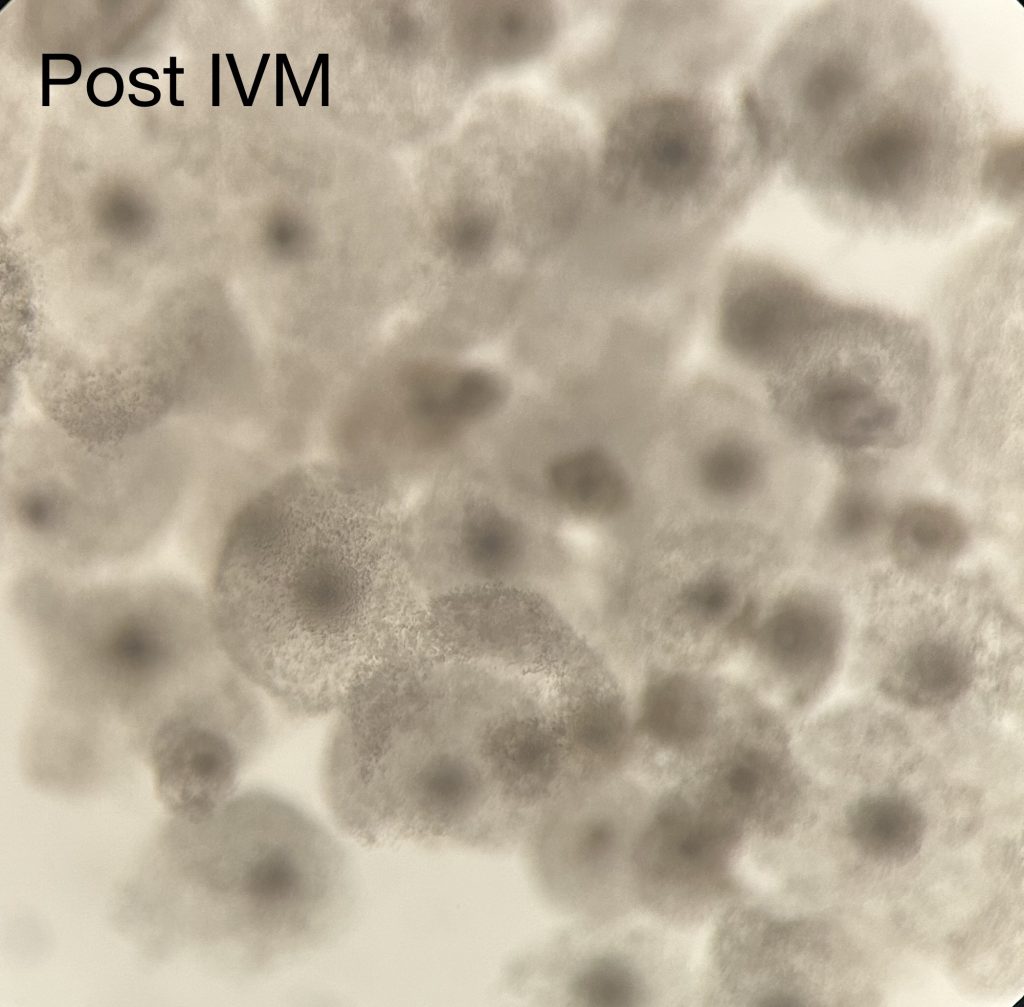
In vitro maturation (IVM) in bovine reproduction is a critical laboratory process that prepares immature oocytes for fertilisation. As a core step within bovine in vitro embryo production (IVEP), IVM enables scientists and breeders to replicate the natural maturation process under controlled conditions, improving embryo development outcomes and reproductive efficiency in cattle.
In simple terms, bovine IVM involves culturing cumulus–oocyte complexes (COCs) in a specialised environment that mimics the physiological conditions found within the animal. This ensures that oocytes develop the nuclear and cytoplasmic competence required for successful fertilisation and embryo development.
Why In Vitro Maturation Matters in Bovine IVF
IVM plays a foundational role in modern cattle breeding programs. Without effective maturation, oocytes cannot progress to the stage required for fertilisation, directly impacting embryo yield and quality.
Key benefits of bovine IVM include:
- Improved embryo production efficiency
- Greater control over reproductive processes
- Support for genetic advancement in cattle breeding
- Enhanced outcomes in assisted reproductive technologies (ART)
Key Stages of Bovine In Vitro Maturation
1. Oocyte Collection and Selection
Immature oocytes are collected either from:
- Ovaries sourced from abattoirs, or
- Live donor animals using ovum pick-up (OPU) techniques
Once collected, oocytes are graded based on morphology, including:
- Cumulus cell layers
- Cytoplasmic uniformity
- Overall structural integrity
High-quality COCs are selected to maximise maturation success and downstream embryo development.
2. Maturation Media and Culture Conditions
Selected oocytes are placed into a specialised IVM culture medium, formulated with:
- Hormones (such as FSH and LH)
- Growth factors
- Energy substrates and nutrients
These components support both nuclear and cytoplasmic maturation.
The culture environment is tightly controlled:
- Temperature: 38.5°C
- Atmosphere: 6% CO₂ in air
- Duration: 22 to 24 hours
This environment replicates in vivo conditions, enabling optimal maturation outcomes.
3. Nuclear Maturation
During this stage, oocytes undergo meiotic progression, moving from:
- Germinal Vesicle (GV) stage →
- Metaphase II (MII) stage
This includes:
- Breakdown of the nuclear membrane (GVBD)
- Extrusion of the first polar body
Reaching MII is essential, as this is the stage at which the oocyte becomes capable of fertilisation.
4. Cytoplasmic Maturation
While nuclear maturation is visible, cytoplasmic maturation is equally critical.
This stage involves:
- Redistribution of organelles
- Accumulation of maternal RNA and proteins
- Preparation for early embryonic development
Without proper cytoplasmic maturation, even fertilised oocytes may fail to develop into viable embryos.
The Role of IVM in Bovine Embryo Production
Successful IVM directly influences the efficiency of in vitro fertilisation (IVF) and subsequent embryo development. It ensures that oocytes are fully competent to support:
- Fertilisation
- Cleavage
- Blastocyst formation
As such, optimising IVM conditions is a key focus for laboratories aiming to improve reproductive outcomes and genetic progress in cattle.
Supporting High-Performance Bovine IVM
The quality of culture media and laboratory conditions plays a significant role in IVM success.
ART Lab Solutions provides specialised media designed to support optimal in vitro maturation outcomes.
Explore the full range of solutions to enhance your bovine embryo production workflows.
FAQs
What is bovine in vitro maturation (IVM)?
Bovine in vitro maturation (IVM) is the process of maturing immature oocytes in a laboratory environment so they can be fertilised and used in embryo production.
How long does bovine IVM take?
Bovine IVM typically takes 22 to 24 hours under controlled laboratory conditions, including temperature and CO₂ levels.
What are cumulus–oocyte complexes (COCs)?
COCs are immature oocytes surrounded by cumulus cells, which support their development and are essential for successful maturation and fertilisation.
Why is IVM important in bovine embryo production?
IVM ensures oocytes reach the correct developmental stage (MII), making them capable of fertilisation and improving embryo development outcomes.
What conditions are required for bovine IVM?
Optimal conditions include:
- Temperature: 38.5°C
- Atmosphere: 6% CO₂
- Specialised maturation media with hormones and nutrient